
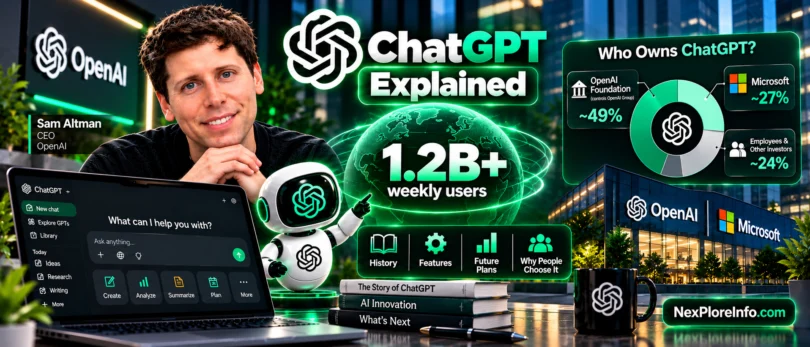
ChatGPT is OpenAI’s conversational AI assistant. You can use it to ask questions, explain topics, draft text and code, research information, analyze files, create images and hold voice conversations, depending on the features available to your account. It launched on November 30, 2022, and grew into one of the most widely used AI apps in the world, with OpenAI reporting 1.2 billion weekly users at DevDay on September 29, 2026. This guide explains what ChatGPT is, who owns it, how it works, why people find it so easy to use, and where it beats or trails Claude, Gemini and Microsoft Copilot.
Whether you are a complete beginner or deciding between AI assistants, you will finish with a clear picture of ChatGPT’s history, plans and confirmed direction.
In this article 18 sections
- What Is ChatGPT? A Quick Explanation
- What Does ChatGPT Stand For?
- Who Created ChatGPT and Who Owns It?
- The History of ChatGPT: From 2022 to 2026
- How Does ChatGPT Work?
- ChatGPT’s Main Features and Capabilities
- Why Is ChatGPT So Popular and Easy to Use?
- ChatGPT SEO Tools, Writing and Research: What Can It Do?
- ChatGPT vs Claude: Which Is Better for Different Tasks?
- ChatGPT vs Google Gemini
- ChatGPT vs Microsoft Copilot
- What Advantages Does ChatGPT Have Over Other AI Assistants?
- Best Ways to Use ChatGPT for Everyday Work
- OpenAI’s Confirmed Plans and Product Direction
- The Future of ChatGPT: Opportunities and Challenges
- ChatGPT Pros and Cons: Advantages and Disadvantages
- Frequently Asked Questions
- Conclusion
What Is ChatGPT? A Quick Explanation
Quick definition: ChatGPT is OpenAI’s AI assistant for conversational help with learning, writing, coding, analyzing information and creative tasks. It can make mistakes, so verify important claims from reliable sources. Available features and limits depend on the account and plan.
ChatGPT is a chatbot app built on top of OpenAI’s GPT family of AI models. You type or speak a request in normal words, and it replies the way a knowledgeable helper would. You can ask follow-up questions, change your mind, or ask it to try again.
People use ChatGPT to:
- Draft and polish emails, essays, captions and reports
- Learn new topics with simple explanations
- Write and fix code
- Search the web and summarize what they find
- Read PDFs, spreadsheets and photos
- Create images and plan daily tasks
It is available on the web, on iPhone and Android, and as desktop apps, in both the USA and the UAE.
What Does ChatGPT Stand For?
ChatGPT combines “Chat” with GPT, which stands for Generative Pre-trained Transformer. “Generative” means it creates new output, “pre-trained” means the model learns from large datasets before you use it, and “Transformer” refers to the neural-network architecture behind the GPT family.
Who Created ChatGPT and Who Owns It?
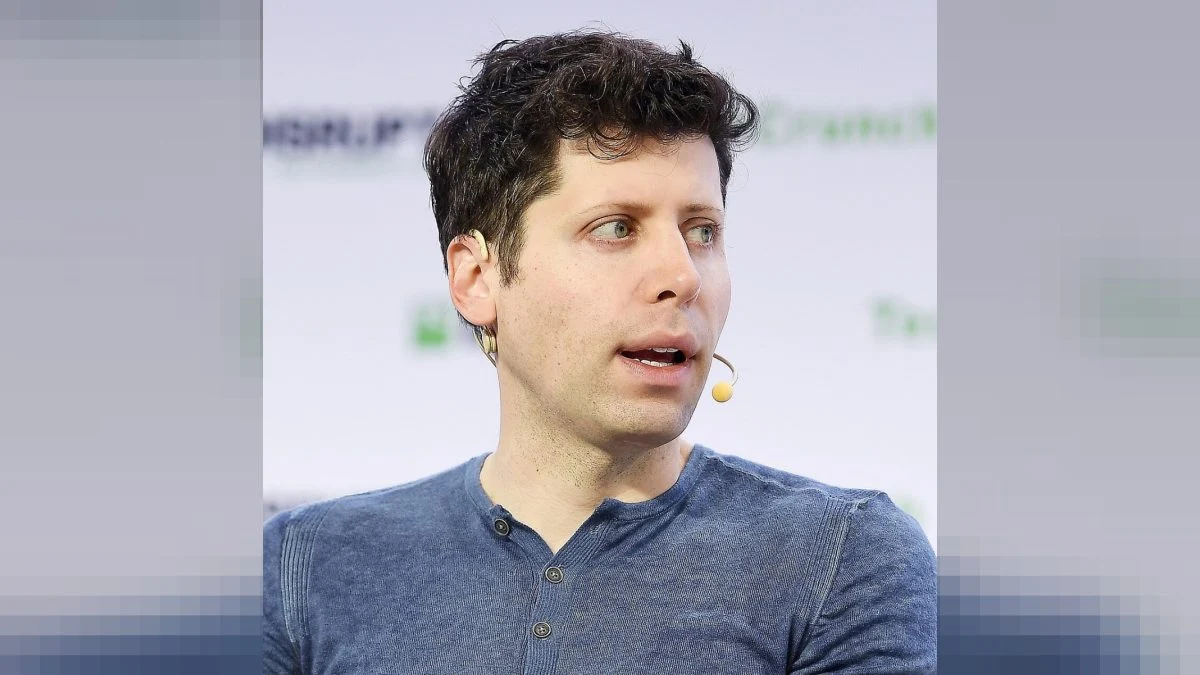
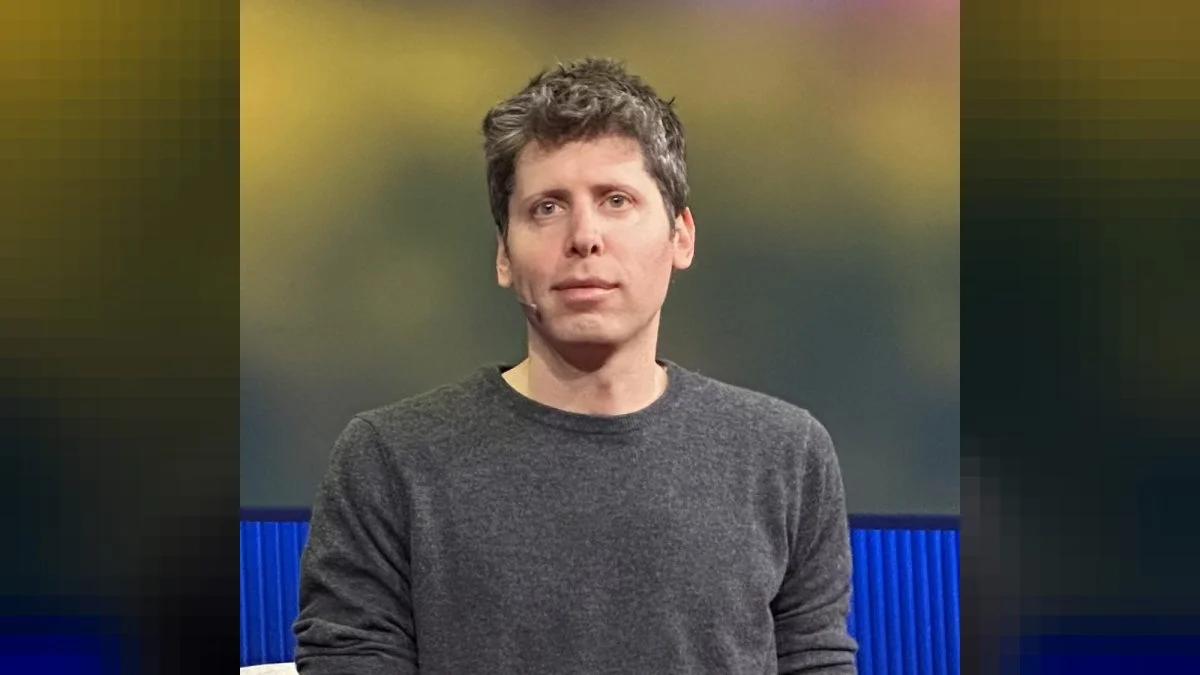
ChatGPT was created by OpenAI, an AI research company founded in December 2015 in San Francisco. Its founding group included Sam Altman (now CEO), Greg Brockman (now President), Ilya Sutskever, Wojciech Zaremba, John Schulman and Elon Musk, among others. Musk later left the board and is no longer involved.
OpenAI vs ChatGPT vs GPT: what is the difference?
- OpenAI is the company.
- GPT (Generative Pre-trained Transformer) is the family of AI models OpenAI builds, such as GPT-5.6 and GPT-6.
- ChatGPT is the app you use, which runs on those models.
Who owns ChatGPT today?
No single person owns ChatGPT. After a 2025 restructuring, the business sits inside OpenAI Group PBC, a public benefit corporation. It is controlled by the nonprofit OpenAI Foundation, which holds a large stake. OpenAI says Microsoft holds roughly 27% of OpenAI Group on an as-converted diluted basis, while current and former employees and other investors hold the remaining 47%. See OpenAI’s official structure page. Sam Altman leads the company as CEO, but he is not its owner.
The History of ChatGPT: From 2022 to 2026
2022 to 2023: a surprise hit
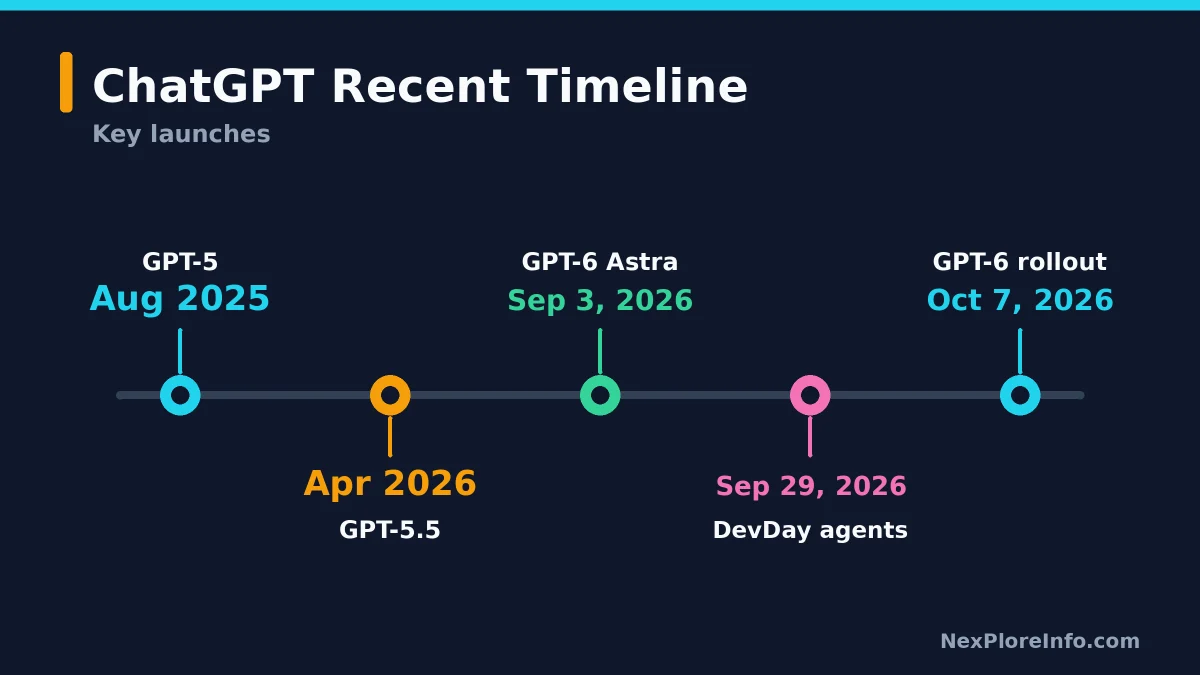
Before ChatGPT, OpenAI spent years on research. In 2019 it created a for-profit arm, and Microsoft invested $1 billion, starting a long partnership that later grew much larger. OpenAI released ChatGPT as a free research demo on November 30, 2022, running on a GPT-3.5 model. It spread faster than almost any consumer app before it. OpenAI added the paid ChatGPT Plus plan in February 2023, and GPT-4 arrived in March 2023 with much stronger reasoning.
2024: voice, vision and reasoning
In May 2024, GPT-4o brought faster responses, natural voice conversations and image understanding, and opened many features to free users. In September 2024, OpenAI introduced “reasoning” models that think step by step before answering, starting with o1. ChatGPT search followed later that year.
2025: GPT-5 and a new company structure
GPT-5 launched in August 2025 and combined fast replies with deeper reasoning in one system. In the same year, OpenAI completed its move to the Foundation and public benefit corporation structure.
2026: GPT-5.5, GPT-6 and agents
- April 2026: GPT-5.5 became ChatGPT’s main model, followed by GPT-5.6 in July.
- September 3, 2026: OpenAI launched GPT-6 Astra, its most capable model, first for selected business customers. We covered it in our GPT-6 Astra explainer.
- September 29, 2026: At DevDay, OpenAI introduced “dots,” always-on agents that work toward goals you set, plus a $500 Pro tier.
- October 7, 2026: GPT-6 began rolling out to everyone in ChatGPT, with GPT-6 Sol for paid plans and GPT-6 Luna for Free and Go.
How Does ChatGPT Work?
In simple terms: ChatGPT processes your question, uses patterns learned during training to generate an answer, and may use tools such as search or file analysis when available. Its answers can still contain mistakes, so important claims need verification.
ChatGPT runs on a large language model (LLM): an AI system trained on huge amounts of text so it learns how words, facts and ideas connect. When you send a prompt, the model predicts the most useful response one small piece of text at a time.
Three steps shape the experience:
- Training: the model learns language patterns from large datasets.
- Fine-tuning: people rate and correct answers so the model becomes more helpful and safer.
- Reasoning and tools: newer models can think through a problem, search the web, run code or open files before replying.
Because it predicts likely text rather than looking up a fixed database, ChatGPT can sound confident while being wrong. This is called a hallucination, explained in our guide to AI hallucinations. Always check important facts, figures and citations.
ChatGPT’s Main Features and Capabilities
- Writing and editing: drafts, rewrites, translations and tone changes.
- Coding: explaining, writing and debugging code, plus Codex for bigger software tasks on paid plans.
- Research and web search: live answers with sources, and deep research for longer reports.
- Images: it can read photos and screenshots and create new images from text. To compare it with other creative tools, see our AI image generator comparison.
- Voice: hands-free spoken conversations on mobile and desktop.
- Files and data: upload PDFs, spreadsheets and documents for summaries and charts.
- Personalization: memory, custom instructions, projects, custom GPTs and connected apps.
- Intelligent UI: with GPT-6, answers can include charts, buttons, forms and small tools.
Privacy is part of the picture too. If you share a device, you can hide sensitive conversations behind a PIN or Face ID, and our guide on how to lock chats in ChatGPT walks through every step.
ChatGPT free vs paid plans
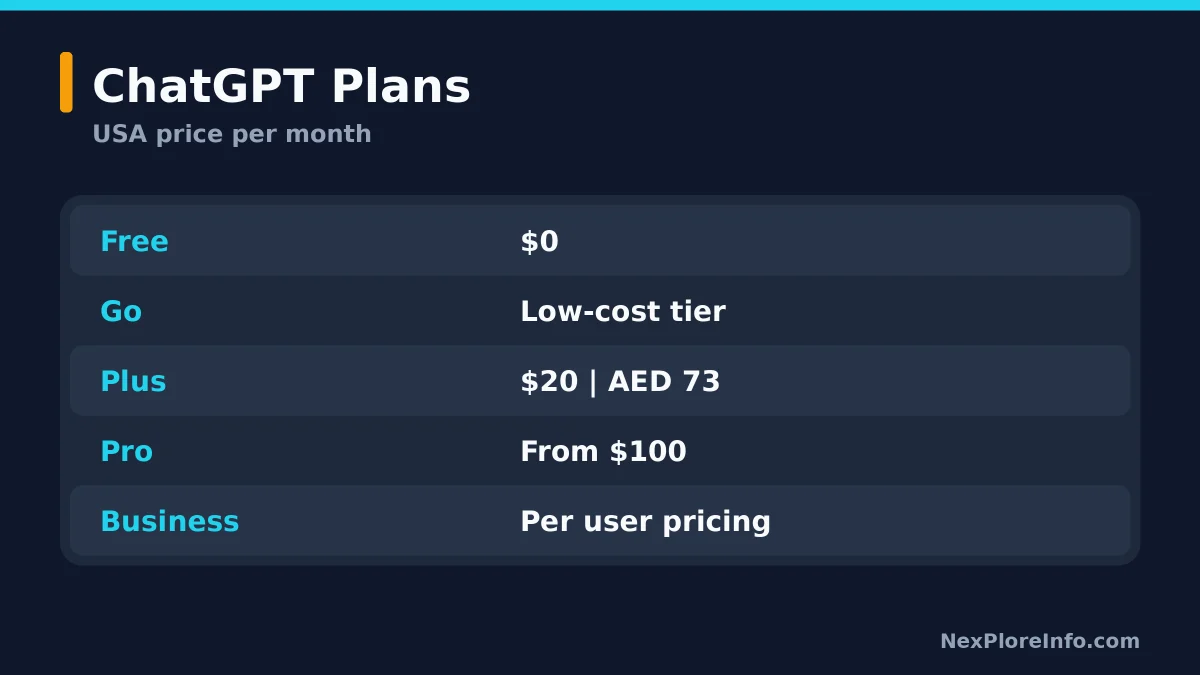
| Plan | Price (USA and UAE) | Best for |
|---|---|---|
| Free | $0 | AED 0 | Everyday chats with limited messages and tools. GPT-6 Luna is rolling out to Free users; availability and usage caps vary by account. |
| Go | Low-cost tier, price varies by region | More messages, uploads, images and voice; may include ads |
| Plus | $20 | AED 73 per month | GPT-6 Sol as the rollout expands, plus GPT-5.6 Sol options, advanced reasoning, projects and deep research |
| Pro | From $100 | AED 367 per month (tiers up to $500 | AED 1,836) | Heavy users who need the highest limits and agents |
| Business and Enterprise | Per user, monthly or yearly | Teams that need admin controls and data protection |
Plan prices, taxes, billing currencies, regional availability and model limits can change. AED figures are approximate conversions, not guaranteed checkout prices. Confirm details on OpenAI’s official pricing page. AED converted at 3.6725.
Why Is ChatGPT So Popular and Easy to Use?
- You just talk to it. There are no menus or commands to learn, so beginners get results on day one.
- It remembers the conversation. You can say “make it shorter” or “now in Arabic” without repeating yourself.
- It does many jobs in one place. Writing, homework help, coding, images and planning all live in a single app.
- A useful free plan. Millions of people try it at no cost before deciding to upgrade.
- First-mover habit. As the app that started the AI chatbot boom, it became the default name many people reach for, much like “Google it.”
ChatGPT SEO Tools, Writing and Research: What Can It Do?
ChatGPT can support SEO work by brainstorming search-intent questions, drafting page titles and meta descriptions, suggesting article outlines and explaining structured data. It is not a substitute for measured rankings or data from Google Search Console. Review its keyword suggestions for relevance and validate performance independently. For more guidance on writing clear requests, see our AI prompting guide.
Curious how big that audience really is, and how it stacks up against Gemini, Copilot and Claude? We compare every official user figure in how many people use AI.
ChatGPT vs Claude: Which Is Better for Different Tasks?
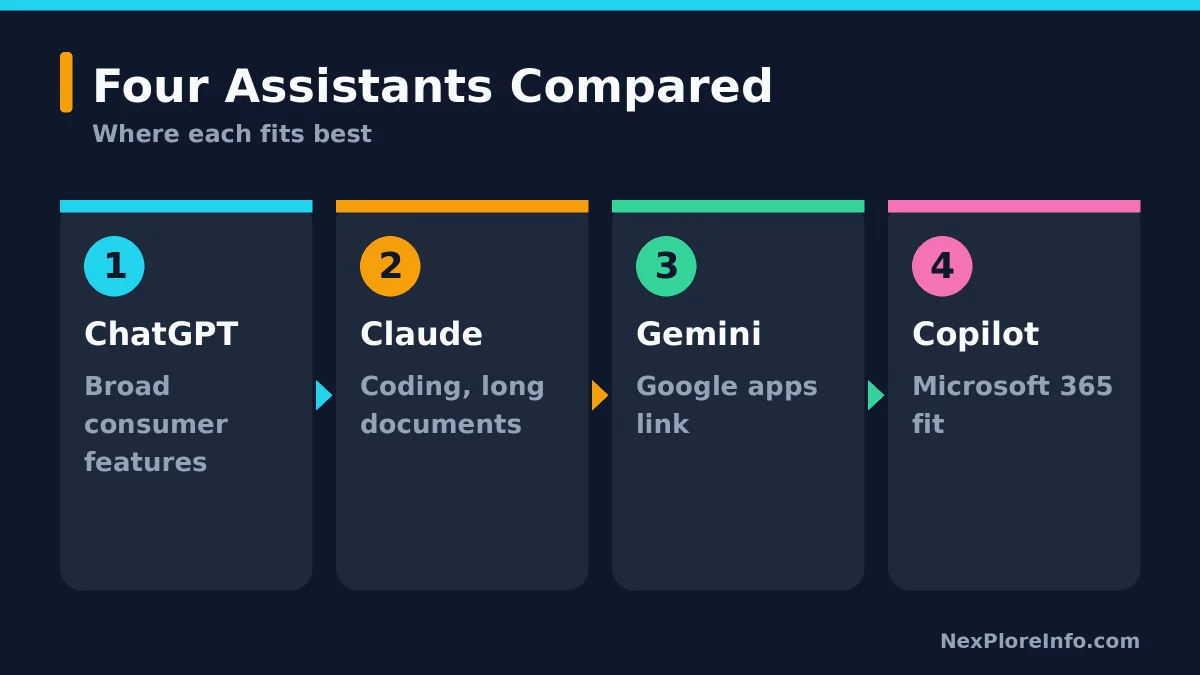
Neither assistant is best at every task. The useful comparison is which tools, integrations, limits and writing workflow fit your needs; capabilities and model access change frequently.
- Writing: both are strong. Many writers find Claude’s tone more natural, while ChatGPT is quick and flexible across formats.
- Coding: Claude Code is widely rated for large codebases, while ChatGPT’s Codex is closely tied to the ChatGPT app and plans. See our best AI coding tools guide.
- Research: both offer web search and deep research reports.
- Long documents: both handle very long files; limits vary by model and plan.
- Images and voice: ChatGPT has a clear edge with built-in image generation and a mature voice mode.
For more background on the alternative, read our Claude AI explained guide. For OpenAI’s latest model direction, see our GPT-6 Astra explainer.
ChatGPT vs Google Gemini
Gemini integrates with Google’s services, including Gmail, Docs and Android, which can be useful for people who work in Google Workspace. ChatGPT offers its own combination of custom GPTs, connected apps, image creation, voice and, on supported models, Intelligent UI. The better choice depends on which integrations you use, your subscription and the specific task. Compare privacy settings and current feature availability before switching.
ChatGPT vs Microsoft Copilot
Microsoft Copilot is Microsoft’s assistant inside Windows, Edge and Microsoft 365 apps like Word, Excel, Outlook and Teams. It is different from GitHub Copilot, which is a coding assistant for developers. Copilot has long used OpenAI models alongside others, so answers can feel similar, but the focus differs. Copilot shines when it can see your company’s emails, files and meetings. ChatGPT is broader for personal use, creative work and learning.
What Advantages Does ChatGPT Have Over Other AI Assistants?
- A very large user base and ecosystem, with OpenAI reporting 1.2 billion weekly users at DevDay on September 29, 2026, plus extensive tutorials, prompts and shared GPTs.
- Built-in image creation and strong voice in the same app.
- A wide plan range, from free to $500 | AED 1,836 per month.
- Interactive answers through Intelligent UI on supported GPT-6 models and plans. Dots is a separate agent product with its own availability and controls.
- Sign in with ChatGPT, which lets paid users carry their plan into partner tools.
Competitors may still be the better pick: Claude for long-form writing and agentic coding, Gemini for Google users, and Copilot for Microsoft-based offices.
Best Ways to Use ChatGPT for Everyday Work
AI for writing: ChatGPT can brainstorm outlines, rewrite drafts, suggest clearer wording and summarize notes. For school or work, check its facts and follow your organization’s rules for AI-generated content. ChatGPT helps produce text; it is not an independent guarantee that the finished writing is accurate or original.
- Content writing: “Write five Instagram captions for a coffee shop launch in a friendly tone.”
- Learning: “Explain compound interest like I’m 12, then quiz me with three questions.”
- Coding: “Find the bug in this Python function and explain the fix.”
- Business emails: “Turn these notes into a polite follow-up email to a client.”
- Research: “Summarize this 40-page PDF into key points and action items.”
- Planning: “Make a 7-day meal plan and a shopping list for a family of four.”
OpenAI’s Confirmed Plans and Product Direction
These items come from OpenAI’s own announcements:
- More interactive answers: OpenAI says it wants ChatGPT to build more task-specific interfaces, and admits GPT-6’s design judgment still needs work.
- GPT-6 Astra across paid plans: OpenAI said Astra will come to Plus, Pro, Business and Enterprise users.
- Agents: dots are rolling out, with more controls over what agents may do announced as coming soon.
- Team workspaces: ChatGPT Space brings people, ChatGPT and agents into one shared space for paid business plans.
OpenAI has not given dates for every item, so treat undated features as announced, not available.
The Future of ChatGPT: Opportunities and Challenges
OpenAI’s published releases show a shift from text-only answers toward interactive interfaces and tools for completing tasks. Intelligent UI, announced in October 2026, can present charts, controls and task-specific experiences where supported. Longer-term predictions about agent autonomy or personalization remain uncertain and should not be treated as a product roadmap.
The challenges are real. Accuracy still matters, privacy questions grow as ChatGPT connects to more data, and ads on lower-cost plans raise tracking concerns covered in our guide to turning off ChatGPT ad tracking. Energy use is another debate, explored in how much electricity one ChatGPT question uses.
ChatGPT Pros and Cons: Advantages and Disadvantages
| Advantages | Disadvantages |
|---|---|
| Very easy for beginners | Can give confident but wrong answers |
| Images, voice, files and search in one app | Best models and limits need paid plans |
| Generous free plan | Ads may appear on lower-cost tiers |
| Huge ecosystem of GPTs and plugins | Privacy settings need attention |
| Fast pace of improvements | Frequent model changes can confuse users |
Frequently Asked Questions
Can you create a bot with ChatGPT?
Yes. Depending on the available plan and tools, users can create a custom GPT for specific instructions or build a separate chatbot using OpenAI’s developer tools. Creating a custom GPT inside ChatGPT is different from deploying a bot on your website or messaging app.
Can ChatGPT check if an essay was written by AI?
ChatGPT can review an essay’s clarity and identify areas needing better evidence, but it cannot reliably prove whether a person or AI wrote the text. A ChatGPT detector, AI writing tester or other AI detection tool, including ZeroGPT, may produce false positives and false negatives. Avoid treating detector scores as proof. Read our AI content detectors guide for more details.
What is ChatGPT used for?
Writing, learning, coding, research, summarizing files, creating images and everyday planning.
Who invented ChatGPT?
OpenAI built ChatGPT and released it on November 30, 2022. OpenAI was co-founded by Sam Altman, Greg Brockman, Ilya Sutskever and others in 2015.
Who owns ChatGPT?
OpenAI Group PBC runs ChatGPT. It is controlled by the nonprofit OpenAI Foundation, with Microsoft holding about 27%.
Is ChatGPT free?
Yes. ChatGPT Free includes everyday text chats and limited access to tools. GPT-6 Luna is rolling out to Free and Go accounts, although availability and usage limits vary. Paid plans provide higher limits and additional capabilities. Check the official pricing page for current local prices.
Is ChatGPT easy for beginners?
Yes. You type or speak in normal language, and you can ask follow-up questions until the answer fits.
Is ChatGPT better than Claude?
It depends on your workflow. ChatGPT offers built-in image generation, voice and a broad app ecosystem, while Claude has its own writing and coding tools. Compare current model access, limits and integrations before deciding.
Which is better, ChatGPT or Gemini?
Gemini can be convenient for people who rely on Google apps. ChatGPT offers a different set of connected tools, voice, image creation and interactive responses. Neither is universally better; compare them for the tasks you actually do.
What is the difference between ChatGPT and Copilot?
ChatGPT is OpenAI’s general assistant. Microsoft Copilot is built into Windows and Microsoft 365 for work tasks, and GitHub Copilot is for coding.
Can ChatGPT make mistakes?
Yes. It can misstate facts or invent sources, so verify anything important.
What is the future of ChatGPT?
OpenAI’s confirmed direction points to more agents, interactive answers and deeper personalization, though it has not dated every feature.
Conclusion
ChatGPT went from a 2022 research demo to an everyday assistant used by over a billion people each week. GPT-6 is rolling out, but the model and features available depend on the account and plan. Its biggest strengths are ease of use, breadth and a free entry point. Students, creators, small business owners and beginners are likely to benefit most. Start with the free plan, try it on a real task from your week, and upgrade only if you keep hitting its limits. For more simple AI guides, keep exploring NexPloreInfo.com.
Image credits: Photo: TechCrunch, Wikimedia Commons, CC BY 2.0. • Photo: Steve Jurvetson, Wikimedia Commons, CC BY 2.0.





Leave a Comment