
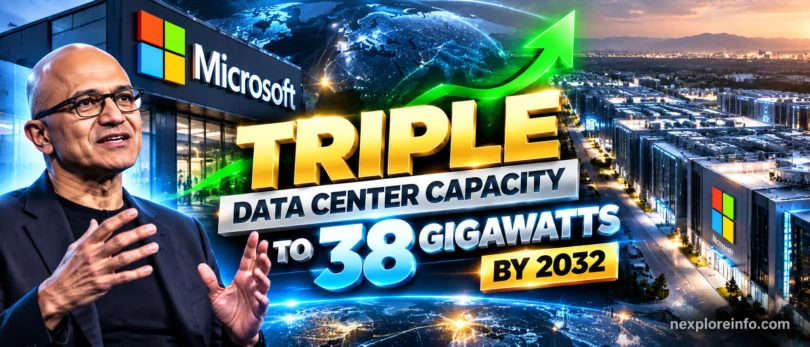
Quick answer: an AI data center is a huge building full of servers and specialized chips, such as Nvidia GPUs, that train and run AI tools like ChatGPT, Claude and Copilot. Its size is measured in gigawatts (GW) of power. To show the scale: Microsoft runs about 12 GW of data center capacity today, and Bloomberg reported in September 2026 that it plans to reach about 38 GW by 2032, more than three times as much.
This guide explains how AI data centers work, what a gigawatt really means, why AI needs so much power, how cooling and water use work, what Microsoft’s plan reveals about the AI boom, and how all of this affects you.
In this article 15 sections
- What Is a Data Center?
- What Makes an AI Data Center Different?
- What Happens Inside a Data Center When You Ask AI a Question
- How a Large Data Center Gets Built
- How Big Is a Gigawatt?
- Microsoft’s 38 GW Plan: What It Shows
- Why Tech Companies Need So Many Data Centers
- How Much Electricity Does AI Use?
- How Data Centers Stay Cool
- The Climate Question
- A Fast-Changing Market
- AI Data Centers in the UAE
- What This Means for You
- Data Center Terms Explained
- Frequently Asked Questions
What Is a Data Center?
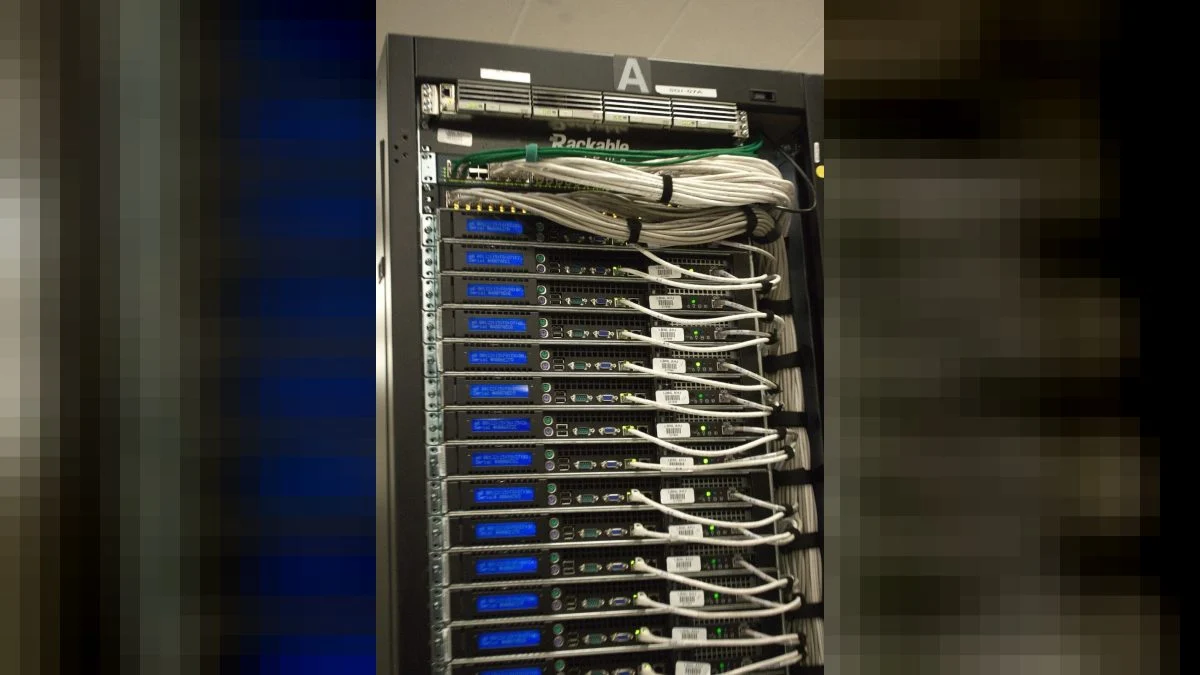
A data center is a secure building that houses thousands of computers, called servers, plus the networking, power and cooling systems that keep them running 24 hours a day. Every time you send an email, stream a video, back up photos or ask an AI chatbot a question, a data center somewhere does the work.
There are three main types:
- Enterprise data centers: owned by one company for its own systems, such as a bank.
- Colocation data centers: buildings that rent space, power and cooling to many companies.
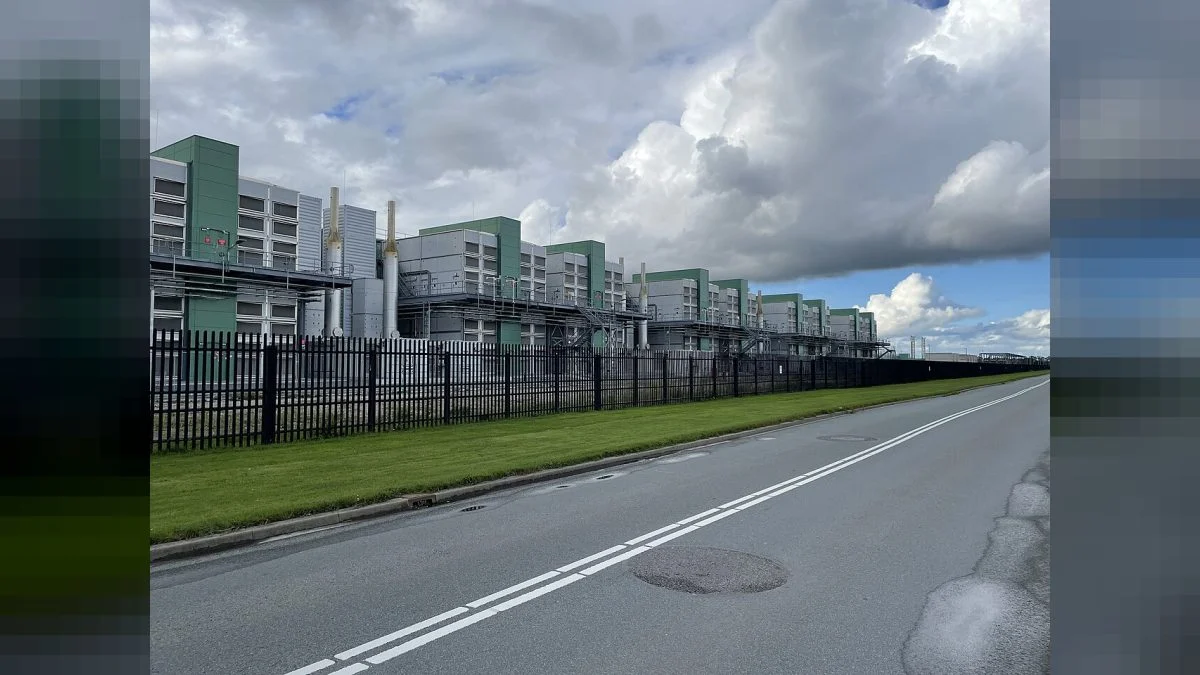
- Hyperscale data centers: giant campuses run by cloud companies such as Microsoft, Amazon and Google, serving millions of customers.
What Makes an AI Data Center Different?
| Feature | Traditional data center | AI data center |
|---|---|---|
| Main chips | General-purpose CPUs | GPUs and AI accelerators |
| Power per rack | Lower | Much higher |
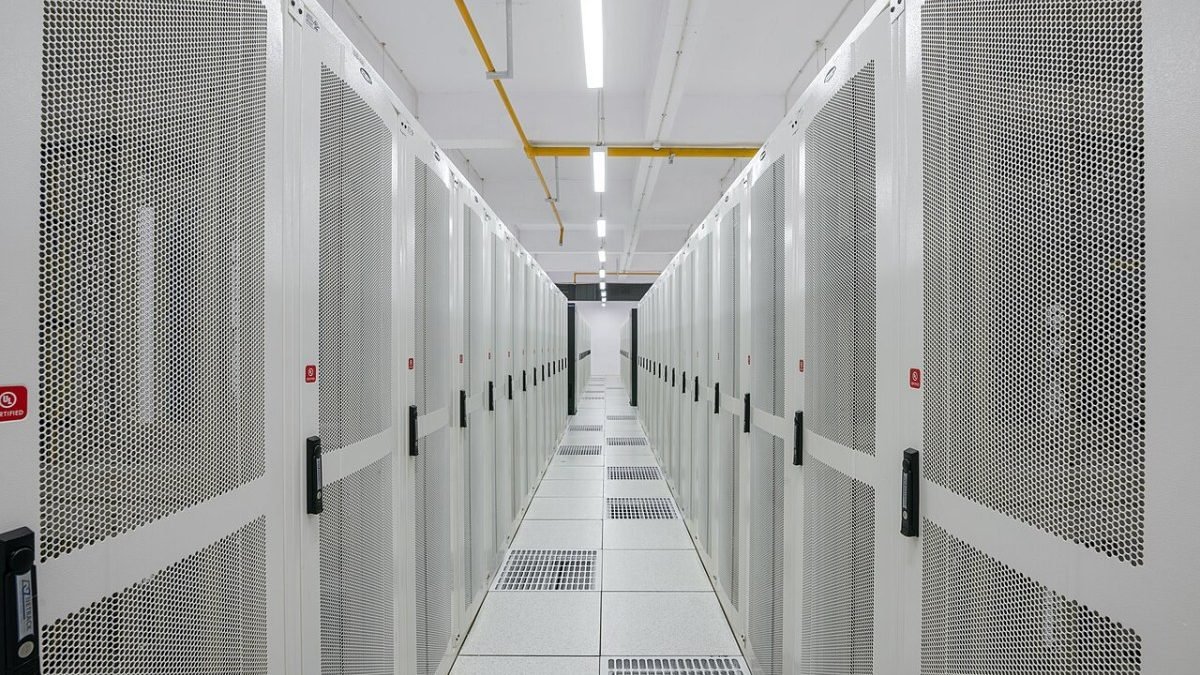
| Cooling | Mostly air cooling | Often liquid cooling |
| Networking | Standard | Very fast links so thousands of chips work as one |
| Main job | Websites, storage, business apps | Training and running AI models |
AI work needs thousands of chips working together on the same task. Training a frontier model can tie up huge clusters for weeks, and running it for millions of users afterwards, called inference, needs even more capacity over time. Microsoft’s AI-focused “Fairwater” sites, for example, house hundreds of thousands of GPUs.
What Happens Inside a Data Center When You Ask AI a Question
- Your request travels: your phone sends the question over the internet to the nearest data center region that runs the service.
- Load balancers route it: traffic systems pick a server cluster with free capacity.
- GPUs run the model: the AI model, loaded across several chips, processes your words and generates an answer piece by piece.
- The answer streams back: the response travels back to your device, often in a second or two.
- Cooling and power never stop: throughout, cooling systems remove heat and backup power systems keep everything running, even during a grid outage.
Multiply that by billions of requests a day, and it becomes clear why AI companies need so much capacity.
How a Large Data Center Gets Built
Building a hyperscale AI campus is a multi-year project with several stages:
- Finding a site: companies look for land near strong power lines, fiber internet connections and, ideally, a supply of clean energy and water.
- Securing power: this is now the slowest step in many places. Large sites need new substations, grid upgrades or their own power plants.
- Construction: buildings, cooling plants and backup generators go up, often in phases.
- Fitting out: servers, GPUs and networking equipment are installed rack by rack.
- Going live: capacity is switched on in stages, so customers can start using it before the whole campus is finished.
How Big Is a Gigawatt?
Data center size is measured by how much electricity it can draw, not by floor space. A gigawatt is one billion watts, roughly the output of a large nuclear reactor.
- 1 GW is often compared to the power needs of hundreds of thousands of homes.
- 38 GW, Microsoft’s reported 2032 target, is more than the peak electricity demand of New York State, according to some analysts.
That is why large data center projects are now as much about power plants and grid connections as about computers.
Microsoft’s 38 GW Plan: What It Shows
According to a Bloomberg report carried by Reuters on September 10, 2026, Microsoft plans to grow from about 12 GW today to about 38 GW by 2032, using a mix of its own buildings and leased capacity. Microsoft declined to comment, so this is a reported internal plan rather than an official commitment.
| Measure | Today | 2032 plan (reported) |
|---|---|---|
| Total capacity | About 12 GW | About 38 GW |
| AI-specific capacity | About 2 GW | Around 12 to 13 GW (about a third) |
| Recent build speed | About 1 GW per quarter | Needs to keep that pace or faster |
Figures as reported by Bloomberg and Data Center Dynamics.
The AI share is the most striking detail. By 2032, Microsoft’s AI capacity alone would be about as large as its entire data center footprint today. Data Center Dynamics also reported that Microsoft opened 88 data centers in its 2026 fiscal year, and a campus in Pecos, Texas will add about 2 GW, one of the biggest single additions in its history.
Why Tech Companies Need So Many Data Centers
The short answer is demand. Microsoft has reportedly had to turn away some cloud and AI customers because it lacked computing power or energy, and its finance chief Amy Hood said in April 2026 that the company would remain capacity constrained through at least 2026.
Every AI product runs in a data center, including:
- Copilot in Windows and Microsoft 365
- Chatbots such as ChatGPT, Claude and Gemini
- AI image and video tools
- Cloud services that other companies use to build their own AI apps
New models, such as OpenAI’s GPT-6 Astra, need ever larger GPU clusters to train and serve.
How Much Electricity Does AI Use?
A single AI answer uses a small amount of electricity, but billions of questions a day add up quickly. We break down the numbers in our explainer on how much electricity one ChatGPT question uses.
Most of a data center’s power goes to two things: the chips themselves and the cooling that stops them from overheating. Engineers track efficiency with a measure called PUE (power usage effectiveness). A PUE of 1.0 would mean every watt goes to computing; modern hyperscale sites aim to get as close to that as possible.
How Data Centers Stay Cool
- Air cooling: fans push cold air through server racks. Common in older and smaller sites.
- Liquid cooling: coolant flows through plates attached directly to hot chips. Increasingly used for powerful AI hardware.
- Evaporative cooling: uses water evaporation to remove heat, which is efficient but uses water.
- Closed-loop systems: recirculate the same coolant to reduce water use, important in dry regions.
Cooling is a major challenge in hot climates such as the UAE and the southern USA, where summer temperatures make air cooling less efficient and water is precious.
The Climate Question
Microsoft pledged in 2020 to become carbon negative by 2030, but reports say emissions linked to its data center electricity have risen sharply. Tripling capacity makes that goal harder unless new sites run on clean power. Microsoft has a large renewable energy portfolio, but as CloudComputing News notes, contracted renewable capacity and actual data center power draw are not directly comparable.
Across the industry, companies are signing deals for solar, wind and nuclear power, and testing ways to run data centers more efficiently. How fast clean energy can keep up with AI demand is one of the biggest open questions in tech.
A Fast-Changing Market
The AI data center market moves quickly. Earlier in 2026, Microsoft walked away from about 2 GW of planned projects in the USA and Europe, a pullback some analysts linked to an oversupply of AI computing. A few months later, it was reportedly planning to more than triple its capacity. That swing shows how hard it is, even for the biggest companies, to predict AI demand years ahead.
AI Data Centers in the UAE
The UAE has made AI infrastructure a national priority. Abu Dhabi is home to large data center projects linked to AI companies, including the Stargate UAE campus announced in 2025 with partners including G42 and OpenAI. Microsoft has also invested in G42. For the region, these projects mean more local AI services, data kept inside the country, and new jobs in engineering and energy.
What This Means for You
- Fewer limits over time: capacity shortages are why some AI tools launch with waitlists, usage caps or regional restrictions. More data centers should ease that.
- Prices: building data centers is expensive, and those costs can show up in subscription prices and even phone prices, as we explain in our AI memory chip shortage guide.
- Jobs and investment: data center construction brings jobs in construction, electrical engineering and operations in both the USA and UAE.
- Chipmakers win: companies like Nvidia are major beneficiaries, as covered in our story on how Nvidia became a $5 trillion company.
Want to understand the AI tools these data centers power? Start with our guides on what ChatGPT is, Claude AI explained and what an AI agent is, the newest and most computing-hungry type of AI tool.
Data Center Terms Explained
| Term | Meaning |
|---|---|
| GPU | Graphics processing unit, the main chip used to train and run AI models |
| Gigawatt (GW) | One billion watts; used to measure data center power capacity |
| Hyperscaler | A giant cloud provider such as Microsoft, Amazon or Google |
| Inference | Running a trained AI model to answer users’ requests |
| Training | Teaching an AI model using huge amounts of data and computing power |
| PUE | Power usage effectiveness; how much of a site’s power reaches the computers |
Frequently Asked Questions
What is an AI data center?
A large facility full of GPUs and other AI chips, plus power and cooling systems, used to train and run AI models such as ChatGPT, Claude and Copilot.
How much data center capacity does Microsoft have?
About 12 gigawatts worldwide, of which roughly 2 gigawatts is built around AI-specific chips.
Has Microsoft confirmed the 38 GW plan?
No. The figure comes from Bloomberg, citing people familiar with the plans. Microsoft declined to comment.
How big is 38 gigawatts?
About the output of 38 large nuclear reactors, and more than the peak electricity demand of New York State, according to some analysts.
Why do AI data centers use so much water?
Some cooling systems use water evaporation to remove heat. Newer closed-loop and liquid cooling designs reduce water use, which matters in hot, dry places like the UAE.
Does the UAE have AI data centers?
Yes. Abu Dhabi hosts major AI data center projects, including the Stargate UAE campus announced in 2025 with partners including G42 and OpenAI.
Image credits: Photo: Derrick Coetzee from Berkeley, CA, USA, Wikimedia Commons, CC0. • Photo: Hay Kranen / Wikimedia Commons, CC BY 4.0 • Photo: PiDatacenters, Wikimedia Commons, CC BY-SA 4.0.





Leave a Comment